NVIDIA: competitive intelligence at AI speed
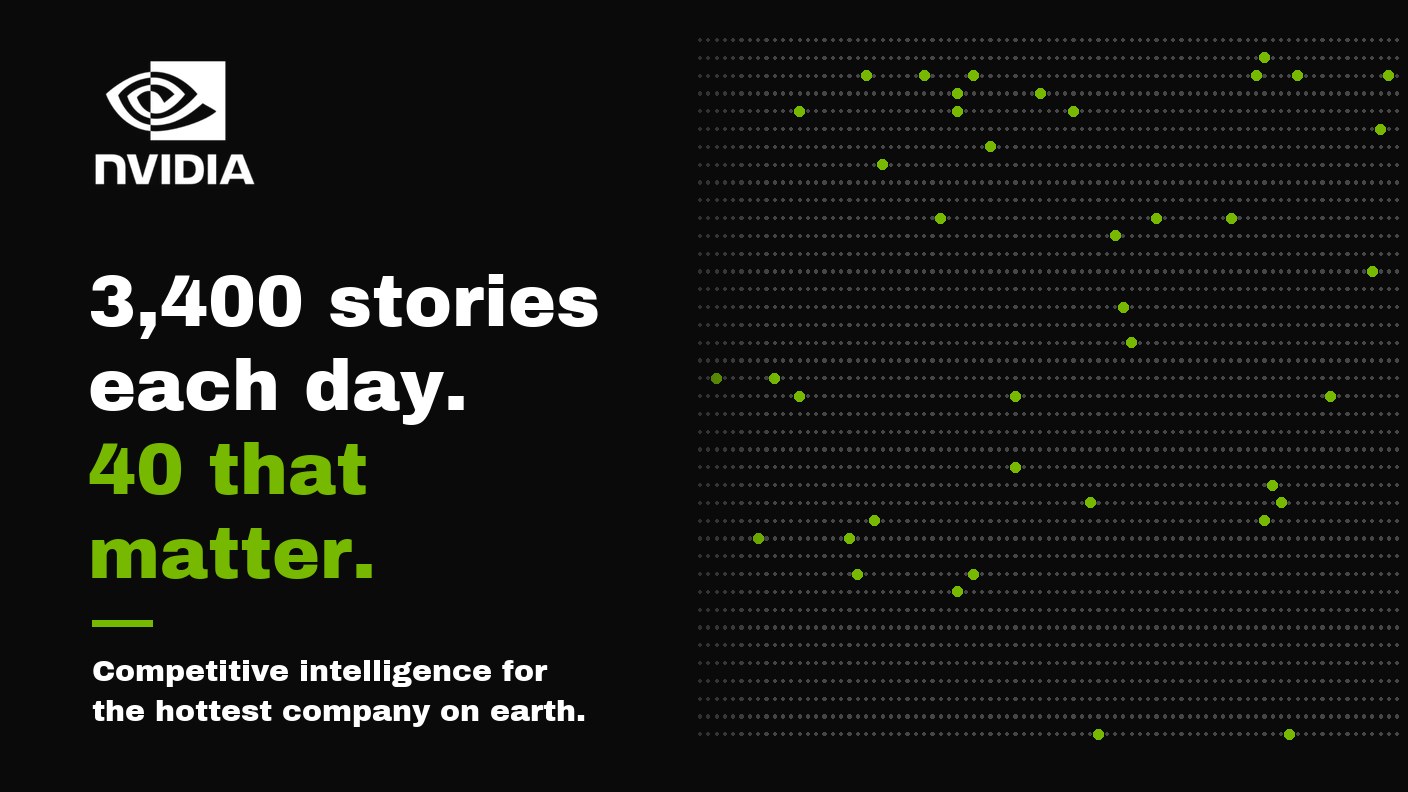
NVIDIA's comms team was drowning in mentions. I lead the design and implementation of a competitive monitoring and intelligence programme that cuts 3,400+ articles a day to around 40 must-reads, routes urgent stories in under five minutes, and gives executives and comms teams their own always-on dashboards.
NVIDIA · 2026 · 
This case study is password protected
Enter the password to view the full work.
Incorrect password — try again.
The challenge
How do you help the hottest company on earth keep on top of the fastest-moving news cycle in history?
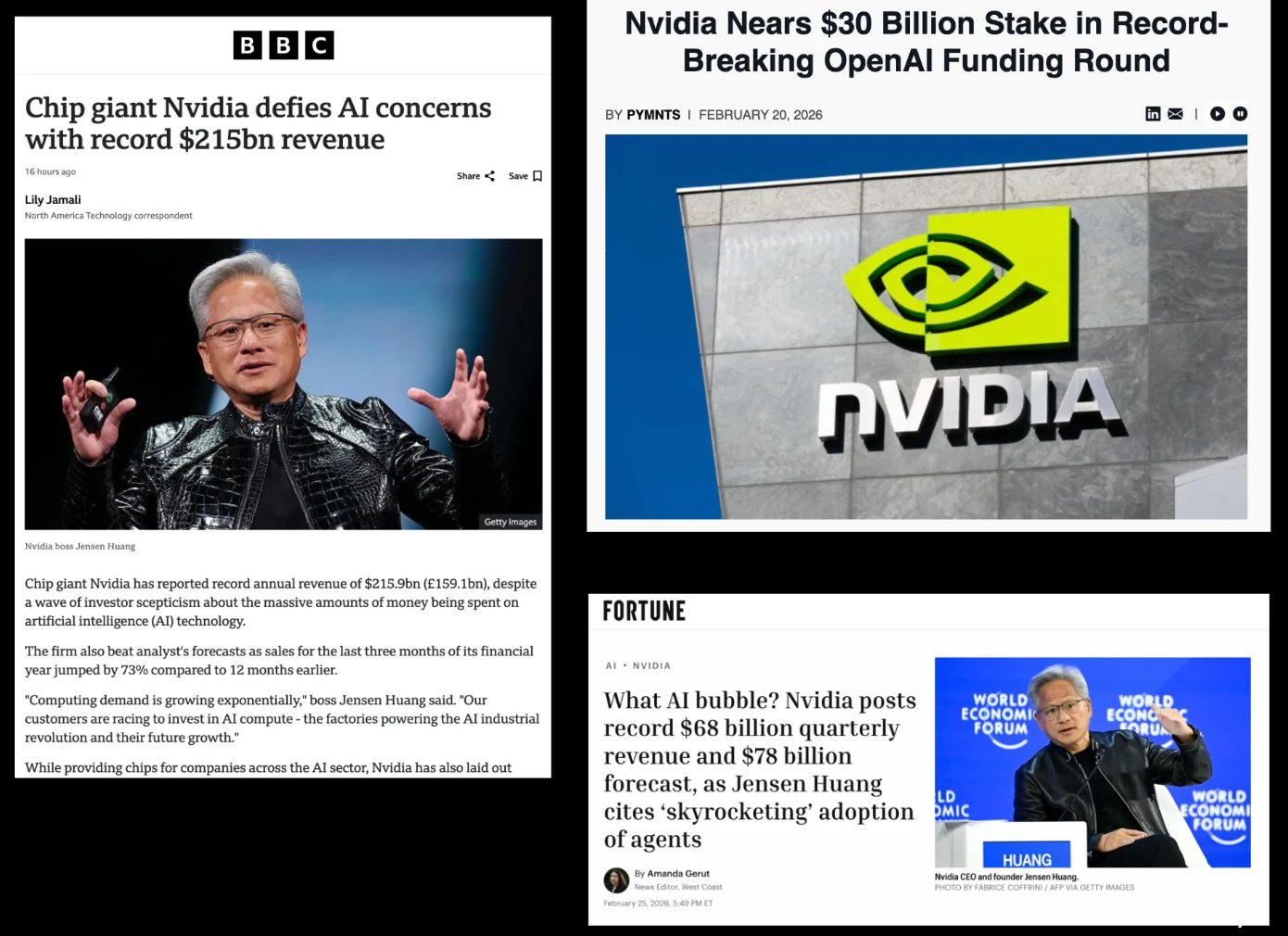
NVIDIA sits at the centre of the AI boom. It is mentioned in almost everything: earnings coverage, chip launches, funding rounds, policy stories, and every competitor’s attempt to position itself against the market leader. When NVIDIA’s communications team came to us, their problem was simple to state. In their words: “We’re drowning in mentions and notifications.”
Traditional monitoring tools didn’t help. They delivered volume, not judgement. Every alert looked equally urgent, co-mentions counted the same as direct comparisons, and the team had to read everything to find the handful of stories that actually mattered. Meanwhile, the competitive landscape in AI infrastructure was moving daily, across hyperscalers, chipmakers, model labs and a long tail of challengers.
The approach
We set four goals for the programme:
- Add clarity at AI speed. Get the right story to the right person within minutes, not at the end of the day.
- Listen to the full media firehose without the notification noise. Ingest everything, but only surface what matters.
- Focus on urgency and importance with a custom methodology, built around NVIDIA’s competitors and priorities.
- Analyse, counsel and advise from a position of insight and confidence, backed by data.
NVIDIA became the lighthouse client for AcroIntelligence, Highwire’s media intelligence platform. The programme went live in March 2026, and NVIDIA’s requirements shaped much of how the product works today.
My role
I designed the programme and the client-facing solution behind it: what the platform needed to do for NVIDIA, how stories should be weighted and prioritised, what each dashboard should show, and how analyst work fits around the automation. I worked with Highwire’s technology team, who built the pipeline, and the account and analyst team, who deliver the daily briefings and counsel.
What we built
A real-time data pipeline. Coverage streams in from news source APIs and feeds, across earned media, Substack, social echo and analyst reports. Every article is ingested, tagged, scored and made searchable in a single coverage database.
A custom weighting and scoring model. We developed our own algorithms to rank every story by urgency and importance for NVIDIA specifically. They weigh the outlet, the reach, the competitor involved and the nature of the mention. A passing reference ranks low; a direct, claim-level comparison with an NVIDIA product ranks high.
Urgency-weighted alerts. High-urgency stories are routed to the right people in under five minutes from publication, without flooding inboxes with everything else.
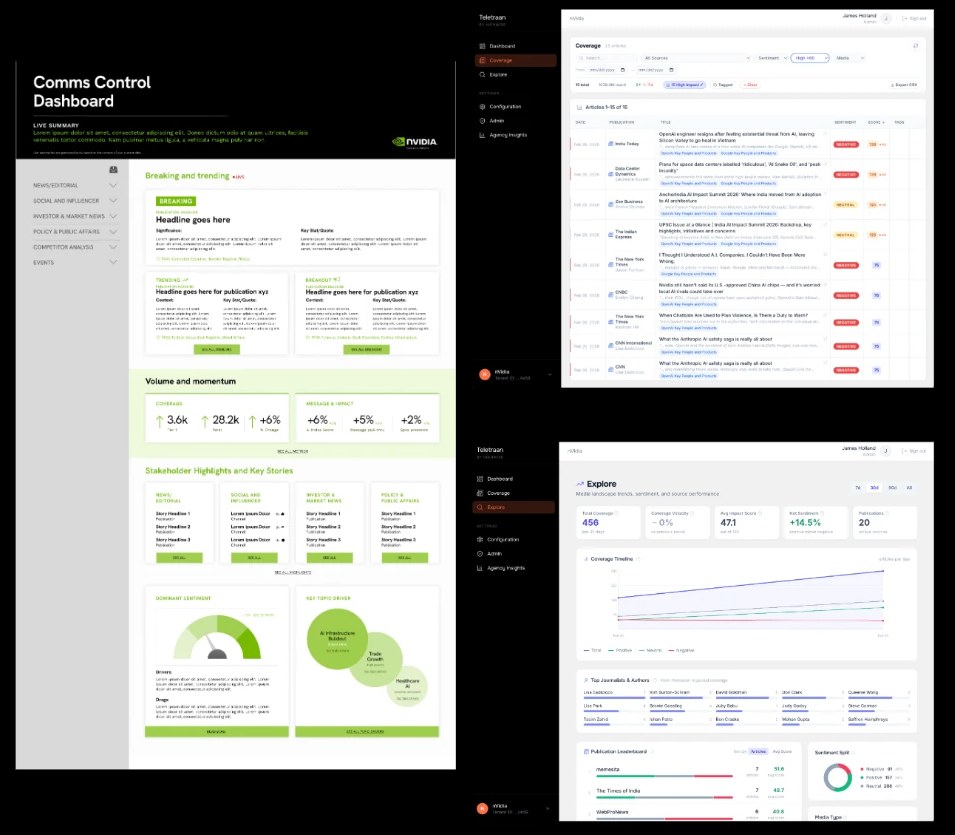
Two always-on dashboards. The executive and comms teams need different levels of detail, so each gets its own view. Executives get the most important stories and a curated news feed. Comms gets a fuller picture: breaking and trending stories, volume and momentum, stakeholder highlights, sentiment and the topics driving coverage.
Analyst briefings. Technology does the filtering; people supply the judgement. Each morning, the team gets the must-read stories with analyst highlights, narrowed to three to five per competitor. Weekly and monthly reports then step back to identify trends and opportunities. Summaries are a mix of AI and analyst writing, so every insight comes with the reason it matters.
The insights
The programme goes well beyond counting mentions. Examples of what it surfaces every day:
- Lexicon and language. Tracking new labels as they take hold, such as talk of an “anti-NVIDIA coalition” gathering pace ahead of GTC. Direct comparisons to NVIDIA are captured at the sentence and claim level, not just as co-mentions in the same article.
- Sentiment divergence and hidden detractors. An article can be positive overall while its NVIDIA mention is negative. This happens often when media use NVIDIA as a foil for a competitor, or the other way round.
- Weak signals. Stories and topics gathering momentum in lower-tier outlets, with an estimate of how long until they become a Tier 1 headline.
Where it’s used
- Corporate communications: daily briefings, narrative tracking and rapid response.
- Executives: an always-on dashboard and news feed of the most important stories.
- Competitive and event intelligence: from GTC to competitors’ earnings.
The results
- 3,400+ articles a day monitored, weighted and analysed across earned media, Substack, social echo and analyst reports.
- Around 40 must-read stories a day, narrowed to three to five per competitor and delivered with analyst highlights each morning.
- Under five minutes from publication to a routed alert on high-urgency stories.
- Two custom dashboards for executive and comms teams, plus email briefings and deep-dive reports.
- From “drowning in mentions” to, in the client’s words, “So helpful. Exactly the analysis we needed.”
- A model for what comes next. The programme is now being extended and renewed, and it became the blueprint for taking AcroIntelligence to more clients.